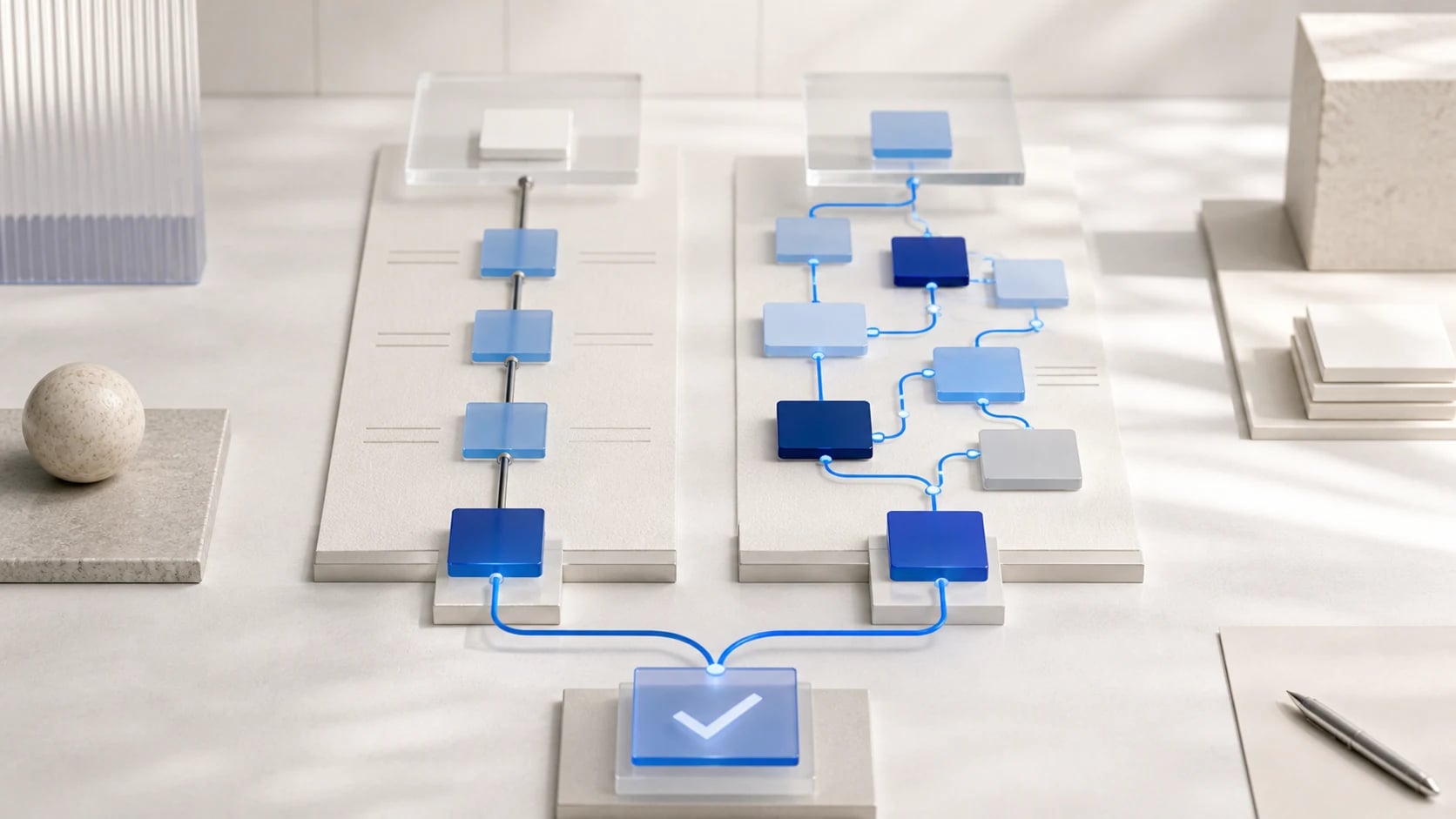
A dependable Codex workflow from request to verification
Make agent work reviewable with a clear assignment, narrow change surface and evidence that the outcome works.
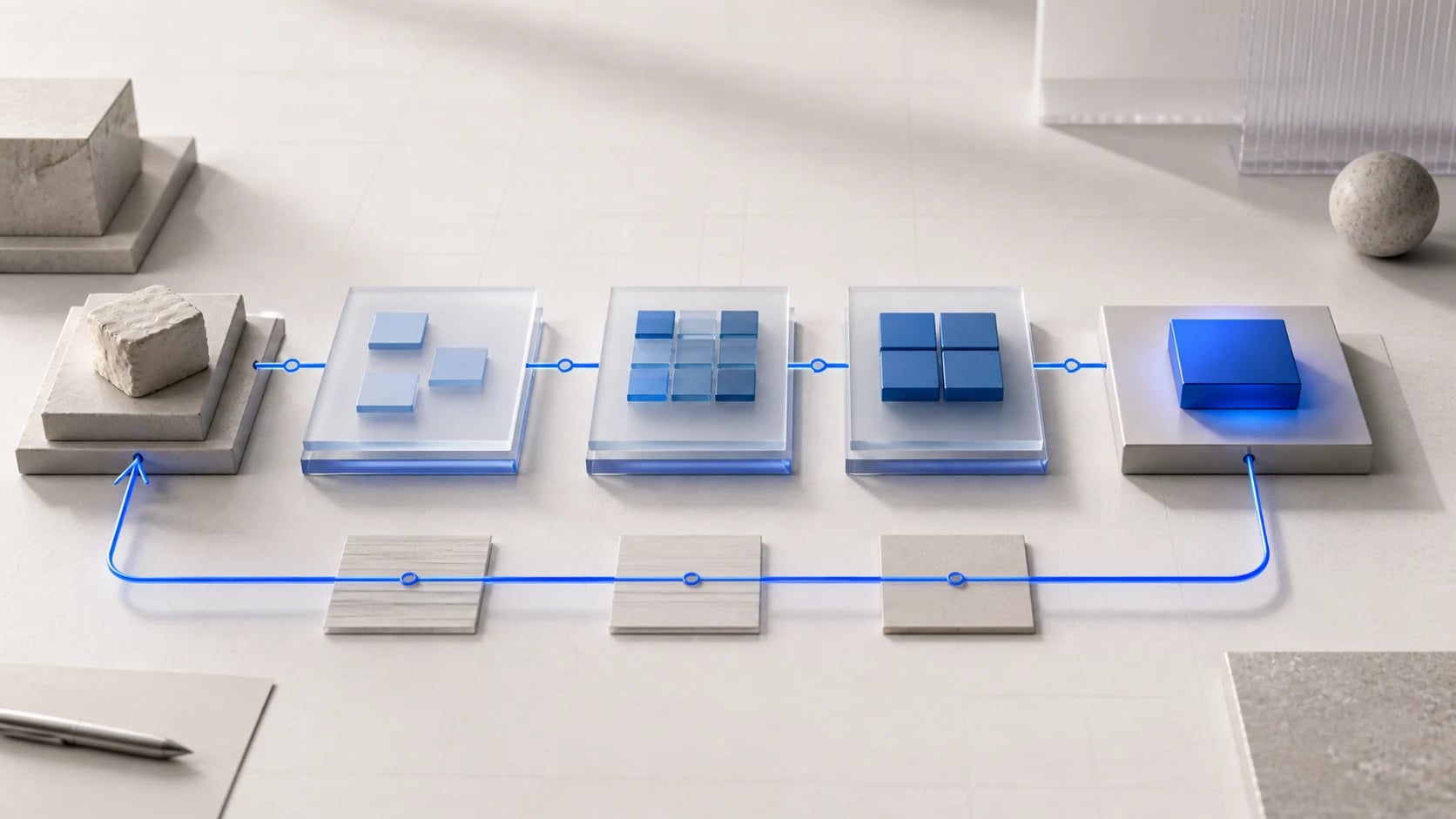
In short
- Acceptance criteria precede implementation.
- A narrow diff is easier to control.
- Every closing claim needs concrete verification evidence.
On this page
Start with the intended effect
Describe who experiences the problem, which behaviour should change and what remains out of scope. Add relevant paths, examples and acceptance criteria. An agent can investigate details but should not silently invent a missing product decision.
Read the existing state first
Have Codex inspect local instructions, implementation, tests and git status before changing anything. This preserves parallel work and conventions while exposing assumptions that still need evidence.
Plan around risk, not ceremony
A small copy correction needs a short route; a data migration needs explicit steps, rollback and checks. Make consequential decisions visible before substantial code changes.

Keep changes narrow
Limit the task to necessary files and avoid opportunistic refactors. A small diff is easier to review, test and reverse. Split independent work only when ownership stays clear.
No. Planning depth should match uncertainty and impact; simple safe changes need less ceremony.
Verify in proportion to impact
Use types, linting, tests, builds and browser checks where they cover risk. Test negative scenarios, responsive behaviour and accessibility when affected. One green command is evidence for one property, not everything.
Provide a checkable hand-off
Report what changed, which checks ran and which uncertainties remain. Link the most important files. A reviewer should be able to validate the claim without reconstructing the whole session.
git diff --check pnpm lint pnpm test pnpm build
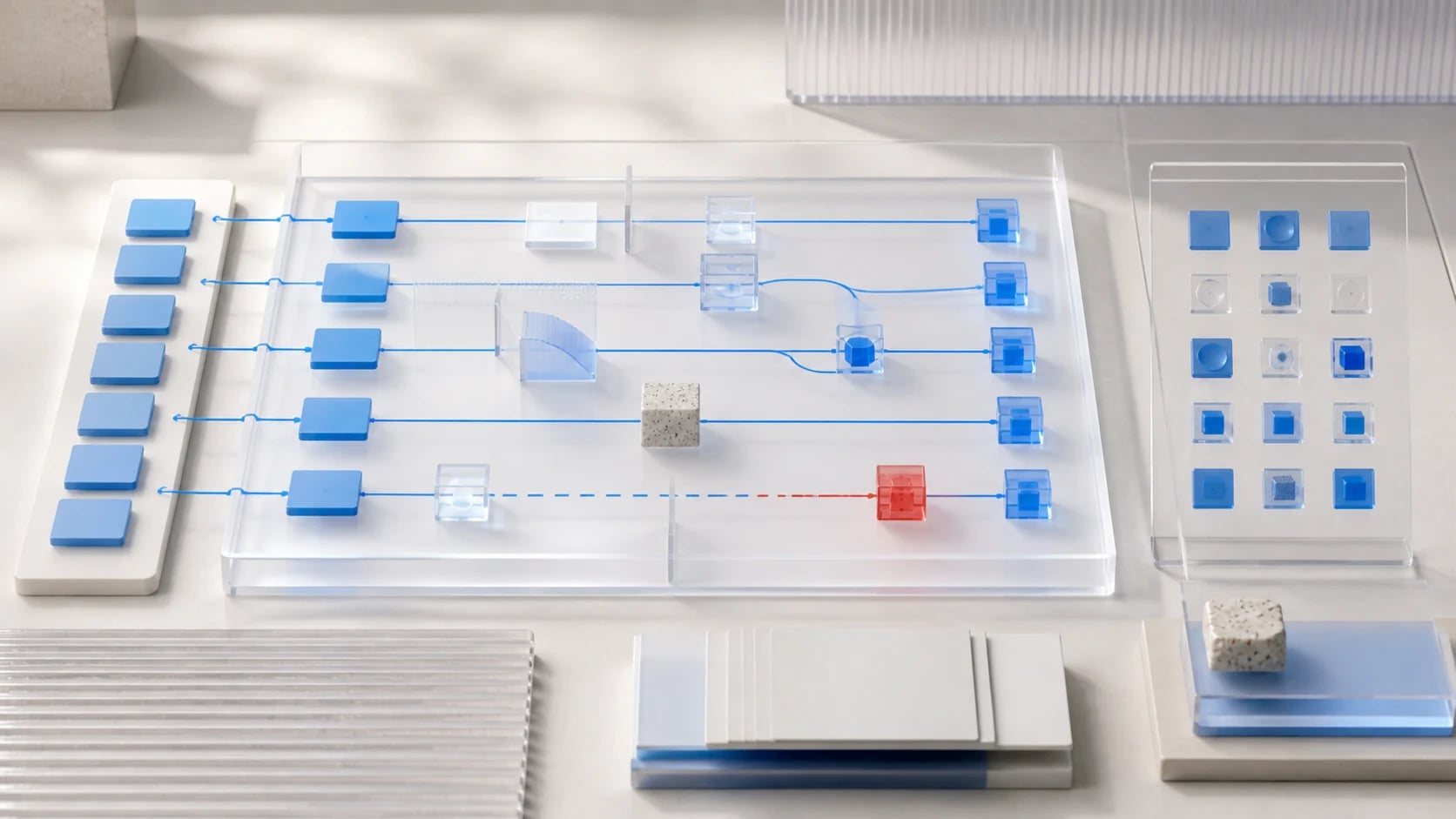
Make reliable Codex workflow verifiable
The decision review for reliable Codex workflow first focuses on one code change from repository audit and scoping through focused tests, diff review and evidenced delivery. Define the acceptable user outcome, essential inputs and authorised approver for reliable Codex workflow before the trial starts. Keep the first reliable Codex workflow trial small enough to separate causes from effects.
Build evidence for reliable Codex workflow around one realistic successful route and also simulate editing generated output as source, overwriting existing work and reporting unrun tests as passed. For every reliable Codex workflow check, record the expected outcome, visible evidence and recovery action when it fails. The final decision question for reliable Codex workflow is: “Does Codex always need a detailed plan?”
reliable Codex workflow: from trial to everyday operation
Assign reliable Codex workflow one operational owner, one subject reviewer and a clear fallback route. Treat the reliable Codex workflow checklist as separate evidenced steps, so punctuation or phrasing never becomes part of the process logic. Ask the relevant user to complete reliable Codex workflow without spoken help and record every point that still needs explanation or manual recovery.
Keep change rights, logging, support and review dates for reliable Codex workflow in one operating plan. Repeat the reliable Codex workflow trial after a change to source data, configuration, model, integration or user role. Expand reliable Codex workflow only when the team can also detect, contain and recover editing generated output as source, overwriting existing work and reporting unrun tests as passed.
Stop the reliable Codex workflow rollout while editing generated output as source, overwriting existing work and reporting unrun tests as passed is not reported visibly and recoverable by the assigned owner.
Creagrid / actie
Practical checklist
Read AGENTS.md and relevant code.
Inspect the dirty worktree.
Set scope and acceptance criteria.
Run risk-based checks.
Report remaining uncertainty.
FAQ
Frequently asked questions
Does Codex always need a detailed plan?
No. Planning depth should match uncertainty and impact; simple safe changes need less ceremony.
Is a successful build enough?
Not always. A build can catch compilation problems but does not prove interaction, content or an external integration.
Content checked on